Turrentine Brokerage.com

Bulk Wine. Grape Brokerage. Strategic Brands.

Turrentine in the News: Tough market for grape growers

Matt Turrentine, Central Coast Grape Broker, was quoted in the San Luis Obispo Tribune where he discussed the recession’s effect on the Central Coast grape market.

Click on the link to read the original article posted Friday, October 22, 2010.

http://www.sanluisobispo.com/2010/10/21/1338199/biz-buzz-tough-market-for-grape.html

Matt Turrentine
Grape Broker

The Life of Your Sample in the care of Turrentine Brokerage

Just how much tender loving care can there be for your wine sample?  Not enough! What really happens to your samples that pass through the doors of Turrentine Brokerage?

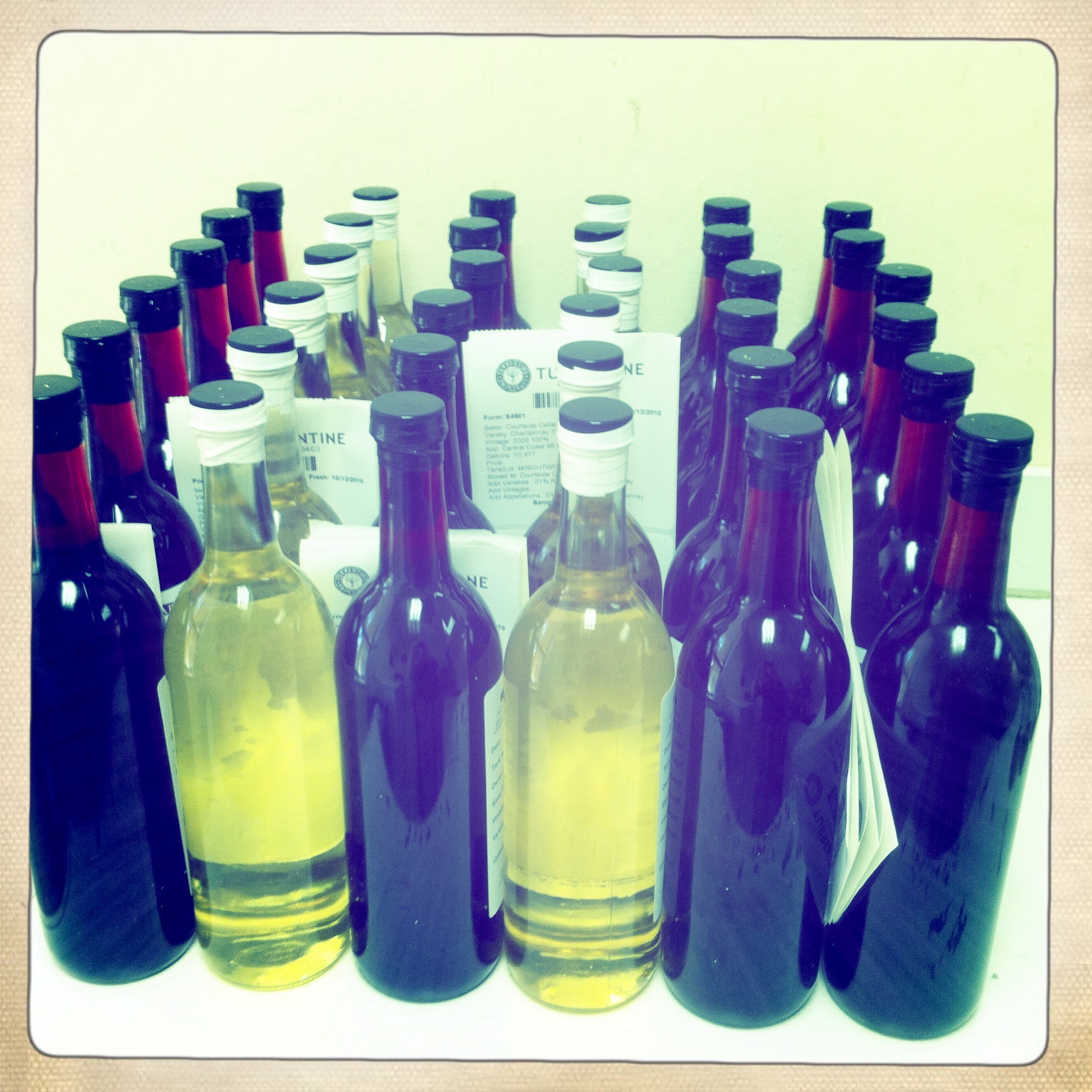
By the time your samples are received at Turrentine Brokerage, we are hard at work marketing them. We process them in an accurate and timely manner so they may be shipped out the same day to potential Buyers.

We pride ourselves on supplying the best service in the business for your samples by having the most accurate listing of active Buyers and by obtaining the freshest samples available.  The daily processing we perform for your samples is not only important to you, the Seller, but to those who will be receiving and tasting your product.  We strive to supply Buyers with as much information as possible to allow them to submit an offer on your wine.  The most critical information is:

1)      Seller

2)      Variety Percentages

3)      Vintage Percentages

4)      Appellation Percentages

5)      Gallons Available for Sale

6)      Lot and tank codes

A list of extensive steps we take to process a wine sample:

  • Unpack every box.
  • Search our database for the lot of wine or enter new wine into the database.
  • Contact the client for missing information.
  • Label each sample with the important detailed information, including a unique lot ID and a date stamp that Buyers need when evaluating samples.
  • Search the database for all potential Buyers, whether it is the main variety requested or an alternative variety or appellation for the Buyer.
  • Match up potential Buyers with the wine.
  • Have each match reviewed by at least two brokers.
  • Prepare wines for shipment.
  • Package shipments.
  • Send out packages to arrive with potential Buyers the next day.
  • Email Buyers a list daily of the wine being shipped with all the details.
  • Weekly, perform an inventory of your samples, making sure we have enough on hand and that they are still fresh.
  • Communicate with you by email or phone to update the availability and request any fresh samples.

In other words, a tremendous amount of care and effort are put into your samples each time we receive them.  All of these steps are to ensure your wines are showcased in the best way and to the most active Buyers.

We like to keep everyone informed that we are doing our best for the clients we serve by sending out emails.  For potential Buyers, we send out an email with information pertaining to the wine sample(s) shipped that day.  Also, keeping in touch with Sellers to make sure we have the most updated information and freshest samples on our shelves.

We want to supply our potential Buyers with the best representation of our Seller’s product.  And the process we go through every day, adds priceless value to your sample.

This is a day in the life of a sample.

Cheers!

William Goebel
Sales Support Bulk Wine Inventory

Mother Nature Throttles Back

While the rest of the world baked, spring refused to give way to summer in California this year.  But on those few days that summer managed to break through, it blasted and blazed.  One could forgive grapevines – and their human attendants – for being confused.  In the coolest growing regions of the North Coast, growers and their vines were racing to get fruit ripe before the expected start of the rainy season this fall.  To advance this process, many expert viticulturalists pulled leaves to allow more sunlight directly on the clusters.  And then the mercury shot up, in some places reaching a scorching 110°. Some of the exposed clusters fried to a remarkable and unusable extent.  In other areas, disease pressure required selective picking that left some tonnage behind.  All in all, the 2010 crop in the North Coast has not come in as most people expected.  More details on the harvest in the North Coast and around the state follow below.

Turrentine Looks to Hire – Special Languages Required

Turrentine Brokerage is looking for someone who knows his or her way down a vine row and around a crush pad.  The right person will be able to accurately translate winery-owner tough talk, winemaker descriptor talk, grape grower hopeful/pessimistic talk, marketer sweet talk, economists’ macro mumbo-jumbo, financial peoples’ money jargon and even legal beagles’ contract conundrums.  Turrentine Brokerage has negotiated over a billion dollars of grape and bulk wine sales during the last decade.  We expect to do much more in the next decade.  We need an additional, high performance, brokerage team member to help us help our clients.  If you, or someone you know, might be the go-getter we need, send an email for more information (in strict confidence, of course) to Steve Fredricks, President, Turrentine Brokerage, c/o Jacque at Jacque@turrentinebrokerage.com.

2010 Harvest Progress Review – Written 10/11/10

Lodi, Delta, Central and Southern Interior (Erica Moyer)

Whites are essentially done and the Northern Interior has proven again the old saw that a short crop gets shorter.  Tonnage for Chardonnay, Pinot Grigio and Sauvignon Blanc all came in below estimates.  It was not uncommon to find blocks 20% below estimate and as much as 50% off last year.  This stimulated some late season buying for the remaining grapes available and stimulated some interest from Interior region wineries for Monterey County and Mendocino County whites.

The Southern Interior experienced an average-sized harvest with a sprinkling of average-plus yields for some whites in a few locations.  French Colombard and Thompsons came in below estimates. Yields on Zinfandel for the Interior were bigger than expected, while Cabernet Sauvignon, Merlot, and Petite Sirah are coming in lighter than expected due to the effects of September’s heat wave.  Almost all the interior grapes have sold, and, where there are any excess tons, the contracted wineries are taking the overage. It has been a long, strange harvest.  The grapevines already have more of a November look than an October look.  The people are looking pretty haggard as well.


Central Coast  (Erica Moyer, Monterey; Matt Turrentine, Paso Robles and Santa Barbara)

Yields vary by variety and area in Monterey County but overall the crop is probably average or slightly above average.  Pinot Grigio and Gewurztraminer have been picked and yields turned out to be average and on estimate.  The Chardonnay harvest is underway and looks pretty strong.  Sauvignon Blanc appears average.  Pinot Noir yields were reduced by the September heat wave, which seems to have turned a potentially large crop of Pinot Noir into an average or below average crop overall.  Merlot in the Southern part of Monterey was also hit hard by the heat wave, although some blocks have still picked out well.

Paso Robles yields have been average to above average so far.  Most white grapes have been picked, and quite a bit of Merlot has also churned its way through the crusher.  The Cabernet Sauvignon harvest is just starting.  Growers are picking everything as quickly as they can. Last week’s rain – about a half an inch on average – caused some problems in Zinfandel and Petite Sirah, although most other varieties escaped unharmed.

In Santa Barbara County, the Pinot Noir crop has come in very light.  Chardonnay is variable – some blocks are down – but overall, we’re looking at an above average crop of Chardonnay in Santa Barbara.

There was significant spot market activity up and down the Central Coast in August and September.  Virtually all grapes found a home.  Throughout the Central Coast, growers did not custom crush large quantities of wine this year.  This was probably due to the fact that the 2009 vintage bulk market was tough, especially for Chardonnay, and also because we had opportunities to move almost all of the tonnage available this year, although not always at the prices that would be sustainable in the long run.

North Coast (Audra Cooper)

Just about every variety is being harvested now somewhere in the North Coast and we are nearly done on Chardonnay.  Cabernet Sauvignon and Merlot are well underway, especially at the earlier- ripening sites, including much of the Napa Valley.  Pinot Noir is nearly done.  Sauvignon Blanc is essentially done in the North Coast.  The last ten days have been fast-paced for Mendocino and other warmer regions of the North Coast; it seems that everything has ripened at the same time.  In general, the Napa and Sonoma harvest has not been quite as hectic.

With Regard to Yields and Crop Size:

Chardonnay:  While there have been numerous reports of Chardonnay being down 40% below estimates, there have also been blocks 10-20% over estimates.  Overall it looks like Chardonnay will be slightly below average especially in Sonoma County, which was hardest hit by the August heat and suffered sunburn damage.  Many growers are dealing with mildew, rot and sunburn as they harvest.

Pinot Noir:  Up to 50% light for some blocks (those that were decimated by heat), but for the most part Pinot Noir has been 15-25% off estimates.

Cabernet Sauvignon:  Still too early to tell exactly what the yields will be at harvest, but it is likely to be 10% off mid-season estimates, mainly due to lack of sizing and weather-related damage.  Raisins and berry shrivel will pull down total yields.

Merlot:  Still too early to tell also, but again likely to be slightly below estimates; however, some of the earlier sites that have been harvested have picked out average and right on estimates.

Sauvignon Blanc:  Up to 40% light in many areas of the North Coast.  Sauvignon Blanc was hit by both mildew and heat-related damage this season.

Time for Turrentine We expect the bulk market to stay busy right through harvest due to four factors:

  1. A lighter harvest in some areas.
  2. A reduced volume of bulk wine listed for sale.
  3. Bulk wine buyers hoping to play the just-in-time inventory game.
  4. Fewer gallons custom crushed by growers from the 2010 harvest compared to 2009.

As trusted and strategic advisors delivering customized solutions to our clients, the earlier we know your likely market position – whether buying, selling or observing from the sidelines – the better chance you have to achieve an optimal solution.  Now is the best time to call if you expect to have bulk wine for sale or if you might need wine.  It is also the best time to start considering strategies for 2011 grapes.

Mother Nature Throttles Back

While the rest of the world baked, spring refused to give way to summer in California this year. But on those few days that summer managed to break through, it blasted and blazed. One could forgive grapevines – and their human attendants – for being confused. In the coolest growing regions of the North Coast, growers and their vines were racing to get fruit ripe before the expected start of the rainy season this fall. To advance this process, many expert viticulturalists pulled leaves to allow more sunlight directly on the clusters. And then the mercury shot up . . .

101 Grape Marketing: Things NEVER to Say to a Grape Buyer

In true David Letterman fashion, these are (comical) statements said to grape buyers by growers while walking through vineyards in California.  In a buyers’s market, these things should never be said:

10. I think this is Cabernet Sauvignon, and I think this is the block. (grower was not sure of variety or location)

9. These are the best grapes in the county.  (no grower has ever grown less than perfect grapes!)

8. This isn’t sunburn, its ripe fruit. (white grapes can turn amber with ripening but buyers usually know the difference)

7. I have great wine samples from this block that I made myself. (vineyard wine samples can either make or break a deal….grower homemade wine usually breaks a deal)

6. I’m looking for the highest bidder for my grapes. (This line never works!)

5. I just planted some old vine Zin. (I have always said, if you can actually plant old vine Zinfandel, you’d make a fortune)

4. Raisins mean it’s ripe and ready to go. (now a days, in the winemakers mind, wineries need high sugar to make good wine but, high sugar means raisining, which means less weight, which means less dollars/ton….not a good thing to say.)

3. Winemakers that don’t buy mildew grapes are lazy. (winemakers say the same thing about growers that have mildew)

2. I never use a Broker. (this is blasphemy…I think it’s in the bible)

1. I don’t care about the money. It’s all about the quality of my grapes! (It is ALWAYS about the money….this should never be said…….)

Brian Clements
Vice President/Partner

Video Blog: The Supply Cycle

Turrentine Brokerage President, Steve Fredricks, gives his expert insight into the Wine Industry’s Supply Cycle.

Wine and Grape Supply Cycle from Rob Olmsted http://www.rgoadvertising.com/.

A Grape Grower’s Million Dollar Question

As a grape broker in the North Coast, I often hear the same question from our grape growing clients… “Can you sell my grapes this year?”  While it seems like a simple question to answer, it is actually not.  Every grower’s situation is different and each of those situations requires specific considerations in relation to the current grape market, which this year, has been challenging at best.  I explain to the grower that in order for me to answer their question, I need to ask a few of my own:

1.)  What is the current condition of your vineyard?  Are your grapes free of mildew and rot?  What percentage of the grapes, if any, have sunburn damage?

With these questions, I am attempting to determine if we will be able to sell the grapes to wineries if interest arises. The answers to these questions are essential in ascertaining the quality of the grapes and our ability to market them. While this growing season has been difficult for every grower to combat what Mother Nature has thrown at them, the last thing a potential buyer wants to see is a vineyard full of mildew.  As in any other year, if wineries are considering buying grapes, they are looking for the best quality they can find.

2.)  What are your pricing expectations?

It is imperative for us to help a grower understand the market conditions and then determine the options the grower has in regards to price and whether or not they can be flexible in their expectations.  Not only does this information help us to market their grapes, but it also allows us to think of creative solutions where possible.   The information enables quick action if we have interest in the particular variety the grower has available.   For example, if the grower has 50 tons of Mendocino Pinot Noir and is expecting $800 per ton but can be somewhat flexible, and we have a winery that is potentially looking for Pinot Noir in the same area but is targeting $650 per ton, there is a potential solution for both parties.  Although there is a price expectation gap between buyer and seller, there might be some middle ground to get a deal done.  This potential deal would not be possible without knowing the price expectations of both parties.

3.)  What are your options?

Obviously, the first, second and third option is to sell the grapes.  However, with current market conditions, it is necessary to have backup options.  The fourth option is to custom crush your grapes.  The fifth option is to again custom crush your grapes, but in a joint venture with a winery.  The sixth and final option is to drop them on the ground, which is a decision that we at Turrentine Brokerage don’t like to suggest or hear of occurring.  It is important for us to know if you plan to, or already have, setup a custom crush contract.  It is also important for us to know if you plan on custom crushing as a last resort or if you plan on doing so if you do not receive an offer above $x per ton.

4.)  Where are your grapes in regards to ripening and when do you anticipate harvesting?

If the grapes are two days from harvesting, there might not be much we can do for the grower; however, it would also depend on how the above questions were answered.  If the grower has not received any offers all year and custom crush or a joint venture is not an option, we might be able to find a buyer who is willing to make an offer that covers picking, delivery and hopefully some of the farming cost.  We, at Turrentine Brokerage, understand that this has been a challenging year for growing and harvesting grapes; however, the information gathered from the above questions allows us to better understand the specific grower’s situation, to provide individual market information and to explore their preferences and expectations in finding a home for their grapes.

On a side note; the earlier in the year a grower lists their grapes with Turrentine Brokerage, the better.  The more time we have to market the grapes, the greater are the odds of finding potential buyers.

“So… can you sell my grapes this year?”

At Turrentine Brokerage, we always strive for that answer to be ‘yes’.

Audra Cooper
North Coast Grape Broker

The wheel keeps turning, the pendulum keeps swinging and the harvests keep coming

Picture a pendulum, swinging one direction then the next. There is a moment in time, less then a millisecond, when that pendulum stops – appearing almost weightless – before the forces of gravity regain control, changing course and swinging in the opposite direction. When the plumb crosses dead center, it is moving at its greatest speed and has enough momentum to carry it through to the other side, continuing the same process again and again.

A pendulum can be used to illustrate how our industry is constantly shifting and changing, but also how it remains the same. The constant is change and cycles, and how we deal with a crop and bulk supply that is either short or long, but only for the briefest of moments – balanced and weightless.

Are we witnessing a change in direction regarding bulk supply? Maybe we are. All the numbers, statistics, projections, pundits, tea leaves and crystal balls (including my Crazy Eight) appear to be pointing to a change. The last time we even came close to talking about balance regarding supply was pre-harvest of 2005… and that chatter was quickly shut down by a record 3.760 million tons of wine grapes picked.  The way it looks today, we may not even make 3.2 million tons this year.  With ‘maybe’ 10 million gallons, give or take of California bulk wine on the market (which may sound like a lot…), and with wine bound to be ‘un-listed’ due to a shorter harvest, we may be able to start using the B-word again, if only for the briefest of moments.

I know that the above sounds completely counter-intuitive to those who have grapes and/or bulk wine for sale at this moment, but it will happen. It has before, and those who can see it coming and can plan around the cycles (changes and constants) will be far better off in the long run.

The Portuguese have an old saying “You plant grapes for your children and Oak (cork) trees for your great grand children…” That’s a long term view, and that is also our view here at Turrentine Brokerage. We are in it for the long haul and have the team of brokers who know what service means, no matter where the current market is. So, give us a call!

Michael Robichaud
Senior Broker/Partner

Turrentine Brokerage.com
Privacy Overview

This website uses cookies so that we can provide you with the best user experience possible. Cookie information is stored in your browser and performs functions such as recognising you when you return to our website and helping our team to understand which sections of the website you find most interesting and useful.